guide
Original Versus Aftermarket iPhone Screens
7 min read
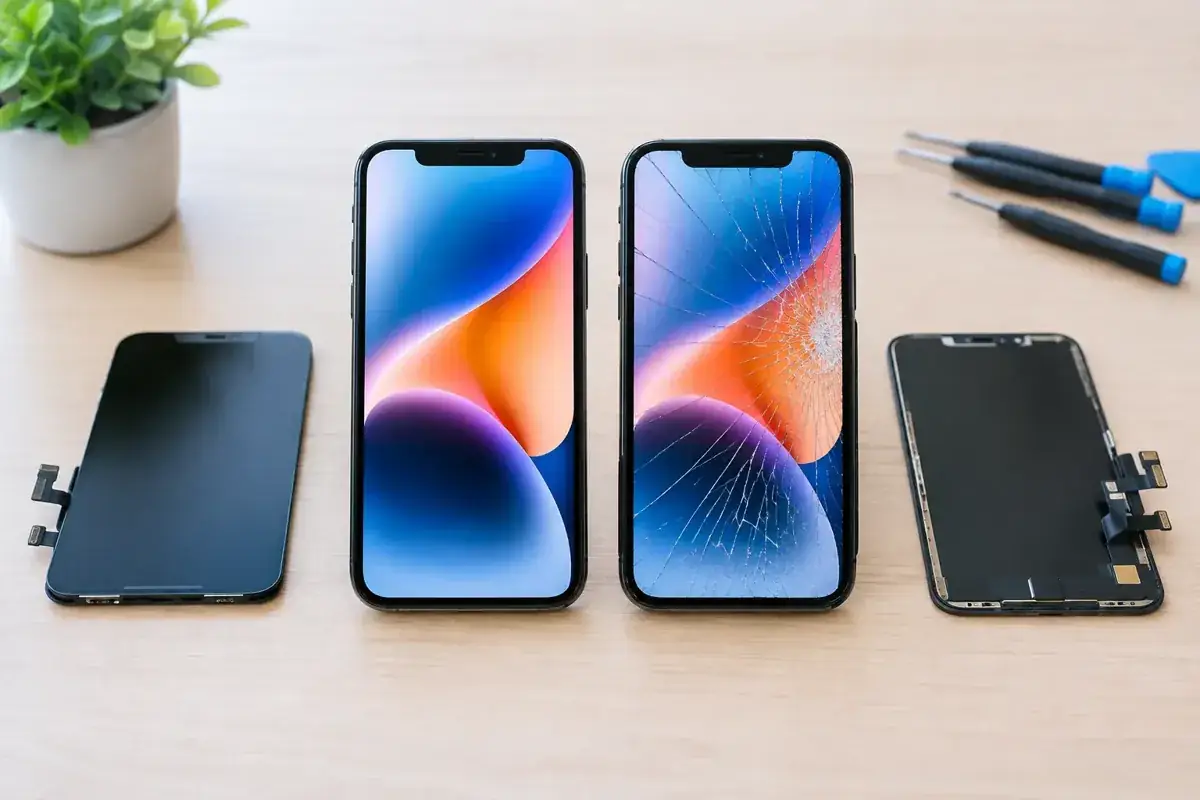
A cracked iPhone screen is never just a cracked screen. It is the Face ID check before a banking app opens, the map that gets you to a meeting in.
A cracked iPhone screen is never just a cracked screen. It is the Face ID check before a banking app opens, the map that gets you to a meeting in Marbella, the boarding pass on a weekend away, and the device your business depends on all day. When comparing original versus aftermarket iPhone screens, the cheapest quote rarely tells the whole story.
The right choice depends on your iPhone model, how you use it, your budget and how long you plan to keep the phone. A good repair should restore a display that feels right in your hand, looks sharp in bright Costa del Sol sunshine and responds instantly when you need it. Here is what you are actually paying for.
What does “original” iPhone screen really mean?
“Original” can be used loosely in the repair trade, so ask the question before agreeing to a replacement. In the strictest sense, it means a genuine Apple display assembly made to Apple’s specifications. It may be a new genuine part, a reclaimed original display from another device, or a refurbished original screen with components restored or replaced. Those are not identical products, even if each is described as original.
A genuine display is designed for the exact iPhone model. Its OLED or LCD panel, touch layer, brightness, colour calibration, sensors and frame all work to Apple’s intended standard. On compatible models, correct fitting and configuration also matter for features such as True Tone, automatic brightness and display-related warnings in iOS.
That said, “genuine” does not automatically mean the best option in every case. A reclaimed original display may have had previous use. A refurbished original may have a new glass layer but an older panel beneath it. The quality of the technician’s fitting, adhesive, seals and post-repair testing remains just as important as the part itself.
Original versus aftermarket iPhone screens: the real differences
Aftermarket screens are made by third-party manufacturers rather than Apple. They range from poor, low-cost copies to high-grade replacement displays built for a close visual and functional match. Lumping every aftermarket screen into one category is misleading.
The biggest distinction is usually the panel technology. Many newer iPhones were built with OLED displays, which produce deep blacks, high contrast and vivid colour. A budget aftermarket replacement may use an LCD or an incell panel instead. It can work perfectly well for calls, messages, maps and everyday browsing, but it may look less rich, use more power or appear dimmer outdoors than the original OLED.
High-quality aftermarket OLED options can deliver an impressive result at a lower price than a genuine replacement. However, they may still differ slightly in peak brightness, colour tone, touch feel, viewing angle or power efficiency. The difference is obvious to some owners and barely noticeable to others.
Brightness and colour quality
If you use your phone outside regularly, display brightness matters. Beach days, golf bookings, navigation and reading messages in a sunny café are harder when a replacement screen struggles in direct light. Original screens generally provide the closest match to the phone’s factory brightness and colour profile.
A premium aftermarket display can be very good, but the word “premium” should mean something specific. Ask whether the panel is OLED or LCD, whether True Tone can be retained where applicable, and what warranty covers the part. A repairer who cannot explain the screen specification is probably selling on price alone.
Touch response and daily feel
The screen is the part of your iPhone you use every minute. Low-grade replacements can feel slightly different when typing, scrolling or using gestures near the edges. Problems are not always immediate either. A screen may look acceptable on day one but develop touch dead spots, flickering or reduced responsiveness after weeks of use.
Quality fitting reduces that risk. The display must sit correctly in the frame, connectors must be secured properly and the phone should be fully tested before it leaves the bench. Saving a small amount on a screen is poor value if you have to return for another repair soon afterwards.
Battery performance
Your display is one of the iPhone’s largest power users. An inefficient replacement panel can put extra pressure on battery life, especially if its brightness performance is lower and you compensate by turning it up. This does not mean every aftermarket screen will drain your battery, but panel quality has a real effect.
For an older iPhone with a battery already below its best, the combination of a low-grade screen and tired battery can make the phone feel much worse than it did before the accident. A proper diagnostic should identify whether the screen is the only issue worth addressing.
Features, warnings and resale value
Modern iPhones identify certain components. Depending on the model, a screen replacement can trigger a parts or service history message if the device cannot verify the display in the expected way. This does not necessarily mean the phone is unusable or that the repair is unsafe, but it is worth understanding before work begins.
Some screen replacements may also affect True Tone, automatic brightness behaviour or other display-related functions if they are not transferred, configured or calibrated correctly. Face ID is separate from the display itself, but it relies on delicate front sensor components that must be handled with care during the repair.
If you plan to sell the iPhone soon, a genuine or properly documented high-quality repair may help buyer confidence. For a spare phone, a child’s first iPhone or a device you simply need to keep running economically, a good aftermarket option can make more financial sense.
When an original screen is worth paying for
Choose an original-quality route when the phone is recent, high-value or central to your work. This is especially sensible for Pro models, OLED-equipped iPhones and devices used for photography, video editing, design work or constant outdoor navigation. If you notice tiny differences in display colour, black levels and smoothness, you are unlikely to be happy with a basic replacement.
It is also the stronger choice when you expect to keep the phone for several more years. Paying more once for a screen that maintains the device’s intended experience can be better value than fitting a cheap alternative and regretting it every day.
Original is not automatically necessary for an older model where the repair cost approaches the phone’s market value. The sensible answer is based on the device, not a blanket rule.
When aftermarket is the smart choice
A high-grade aftermarket screen is often the practical answer when you need a fast, dependable repair without the highest possible bill. For many iPhone owners, the priority is getting back to work, staying connected to family or having a reliable phone for travel - not analysing colour accuracy pixel by pixel.
The key phrase is high-grade. A reputable repairer should be upfront about the part being fitted and offer options rather than presenting one vague “screen replacement” price. You should know whether you are choosing a compatible LCD, a compatible OLED or a genuine-quality option, and what trade-off comes with each.
A quality aftermarket screen can be excellent value for iPhone models that are a few generations old, particularly where the owner wants a dependable daily device rather than a showroom-perfect restoration.
Do not judge the repair by price alone
A very low quote can hide compromises: a basic panel, weak adhesive, no testing, reused parts, limited support or no meaningful warranty. Water resistance is another area where honesty matters. Opening an iPhone disturbs its factory seal. Careful technicians fit new adhesive seals, but no independent repair should casually promise factory-level water resistance after the device has been opened.
Before approving the repair, ask what grade of screen will be fitted, whether it is OLED or LCD, which functions will be tested, and how the warranty works. Those questions take less than a minute and can prevent a costly disappointment.
At iBrokeIt, contact the Fuengirola home workshop for an assessment and wait for appointment confirmation before travelling. Repair suitability, parts and timing are confirmed individually.
Choose for the phone you have, not the advert you saw
There is no universal winner between original and aftermarket iPhone screens. Original-quality displays usually offer the closest factory experience, while a carefully selected aftermarket screen can be the more sensible, cost-effective repair. What matters is a straight answer about the part, skilled installation and a warranty that means something if anything goes wrong.
Your iPhone should come back looking clean, responding properly and ready for real life - whether that means client calls in Málaga, directions through Benalmádena or a busy day running your business. Choose the repair that keeps it useful, not merely switched on.
Ask about a repair at the Fuengirola workshop
Discuss original versus aftermarket iphone screens, see repair enquiries from Fuengirola, or contact iBrokeIt.
We work from home in Fuengirola, not a walk-in shop. Request an appointment and wait for our reply before travelling. Your appointment is not confirmed until we get back to you, and we cannot always be available. iPad and MacBook repairs are quote-only. Every fitted repair part has a one-year warranty beginning on the repair date; new accidental damage is excluded. iPhone liquid-damage cleaning starts at a €99 non-refundable deposit for cleaning only; parts and further work are quoted separately. Repair or data recovery is not guaranteed.
For your next step, see check your exact iPhone repair price.
Need this repair? Check your price
iBrokeIt.shop · Fuengirola